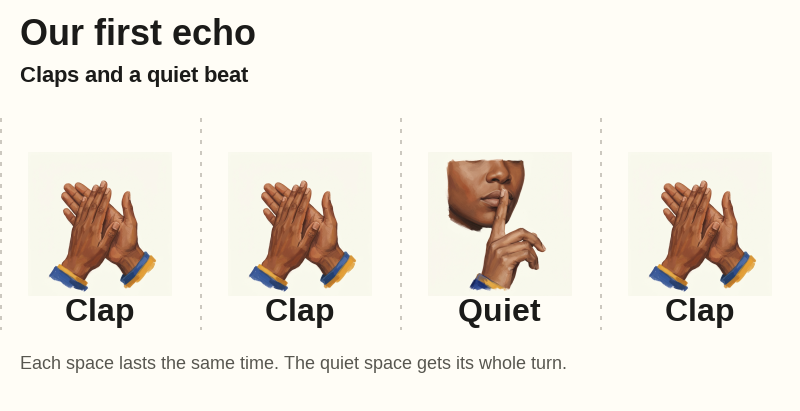
Our first echo
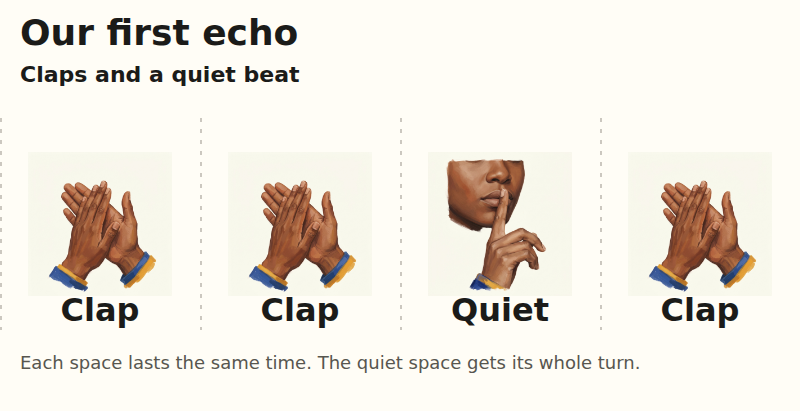
Claps and a quiet beat
Let the class invent a different ending.
For the teacher
Nine patterns to hear, echo and change. Choose a pattern to open the activity; its picture stays hidden until you choose to show it.
Clap pictures mark sound; quiet pictures mark silence. The widths show time until the next event. Try the longer patterns one row at a time.
Claps and a quiet beat
Let the class invent a different ending.
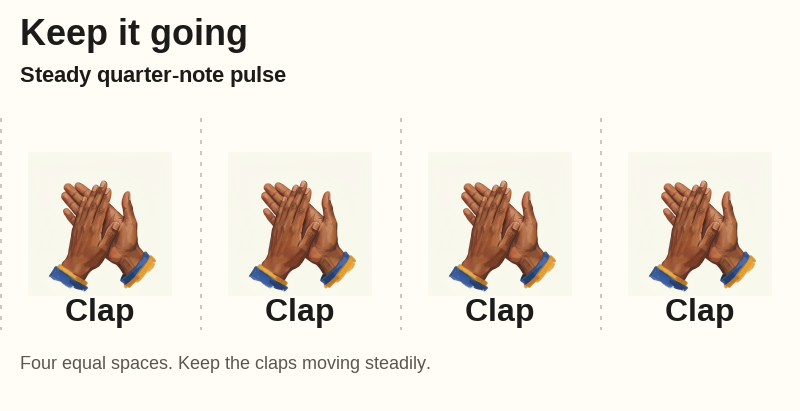
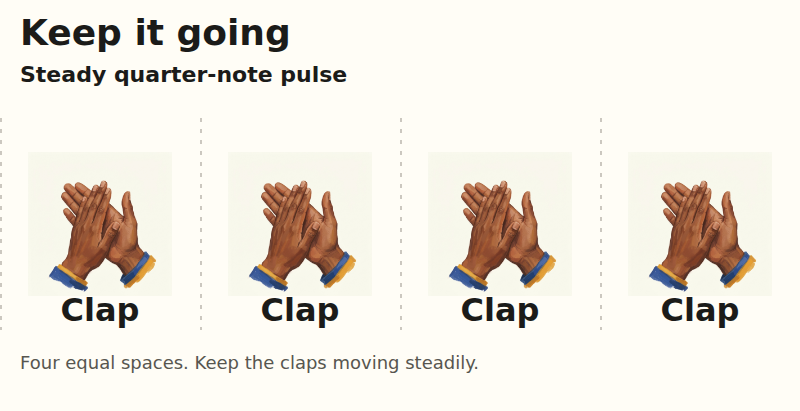
Steady quarter-note pulse
Try small claps, then large silent movements on the same pulse.
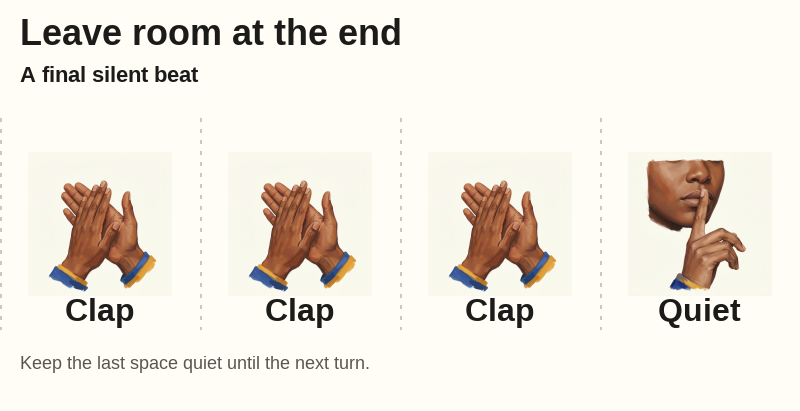
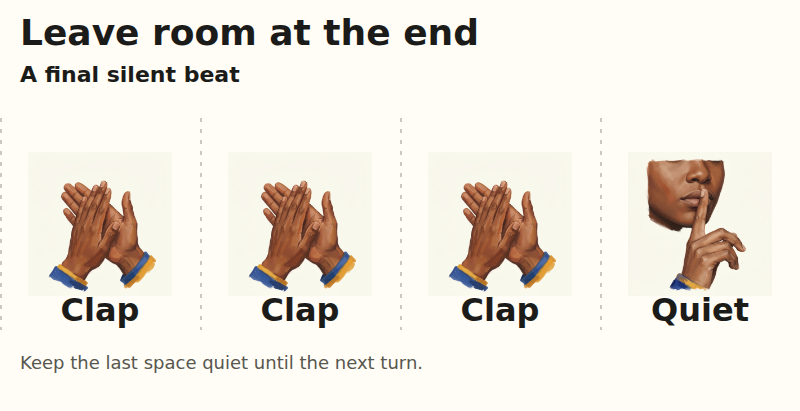
A final silent beat
Ask someone to lead the quiet ending with a gesture.
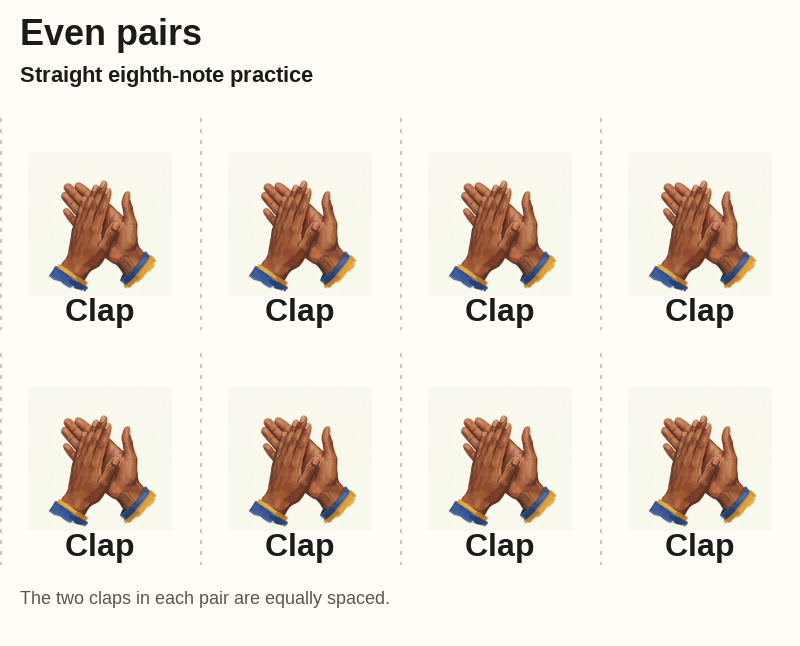
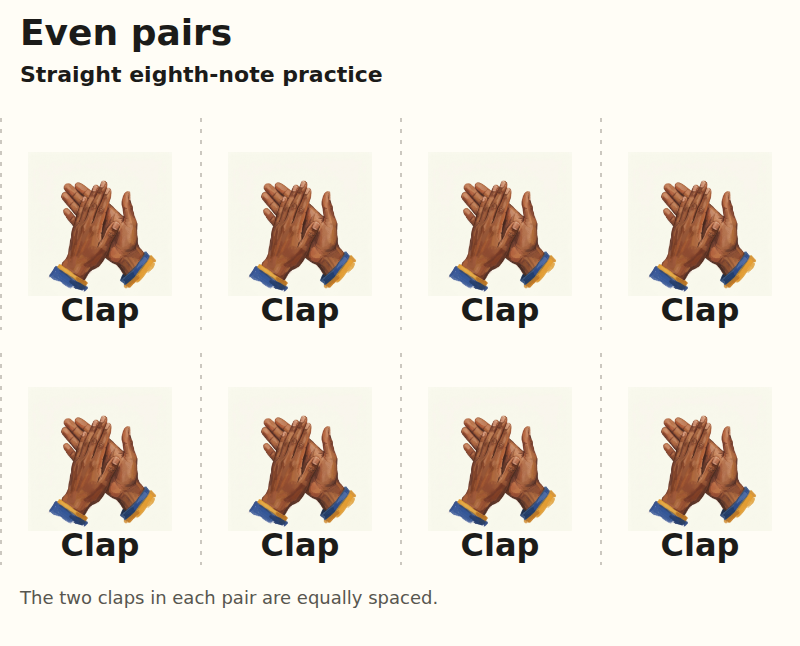
Straight eighth-note practice
Echo one pair first, then try the whole phrase.
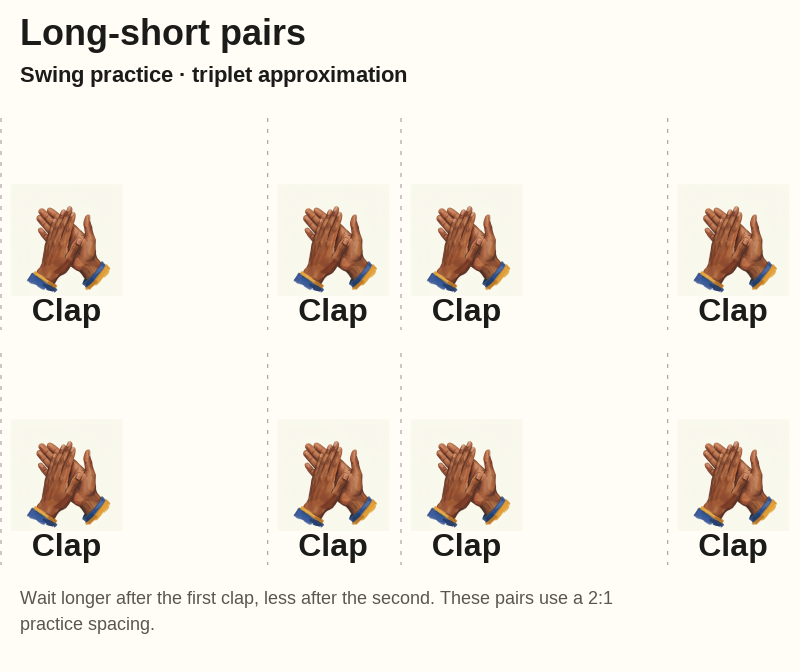
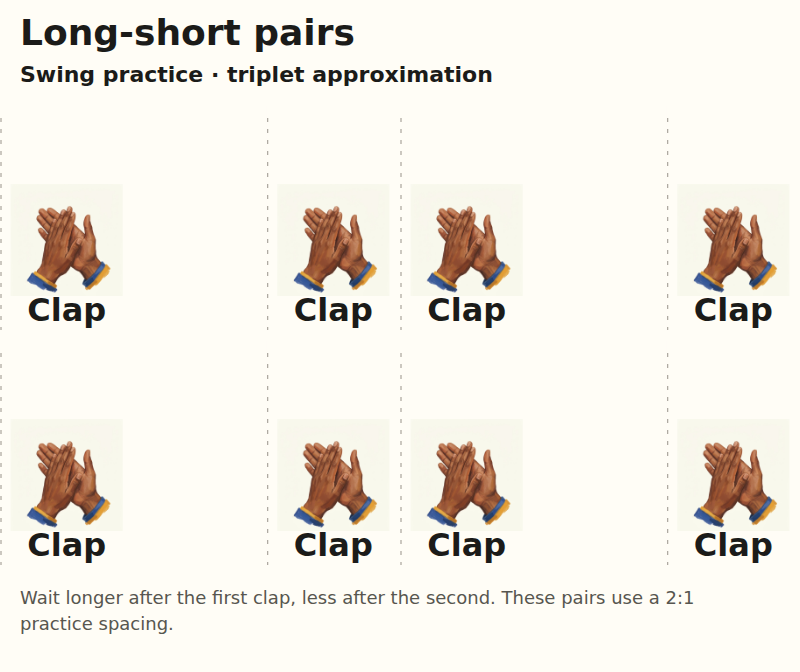
Swing practice · triplet approximation
Try one long-short pair, then compare it with Even pairs.
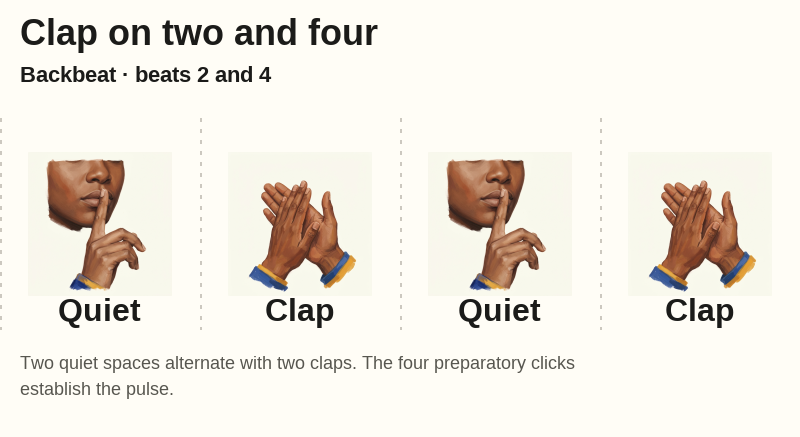
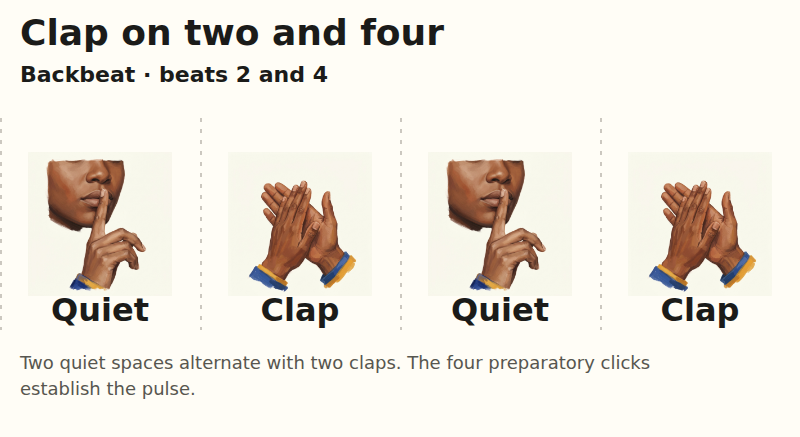
Backbeat · beats 2 and 4
The teacher can step all four pulses while the class claps on two and four.
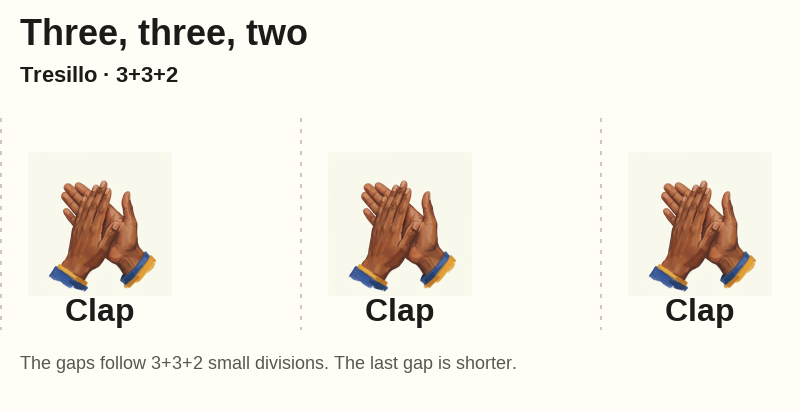
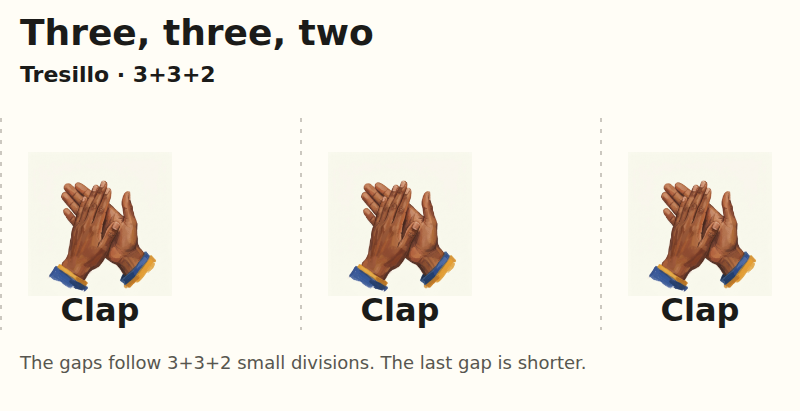
Tresillo · 3+3+2
Keep a walking pulse while the teacher models the three attacks.
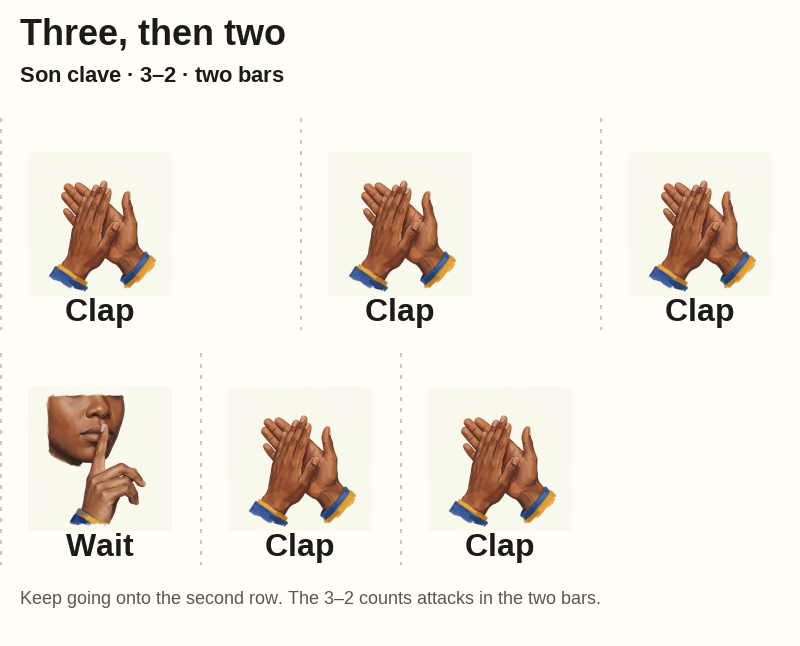
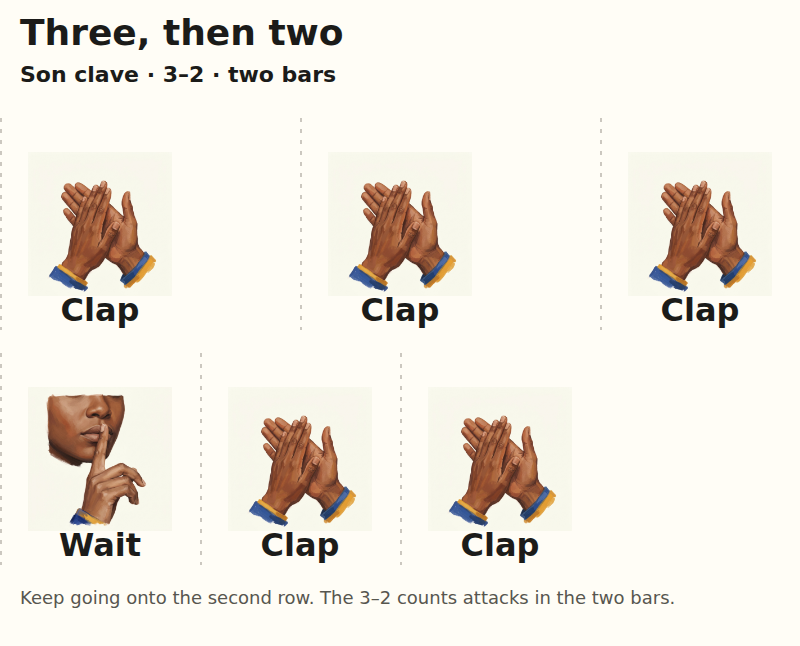
Son clave · 3–2 · two bars
Teacher-led challenge: echo each bar separately before trying both.
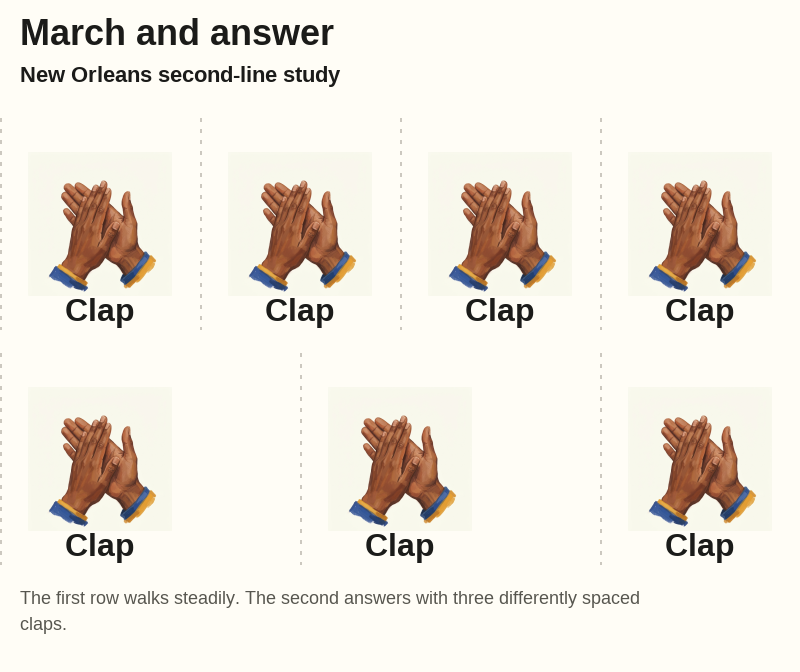
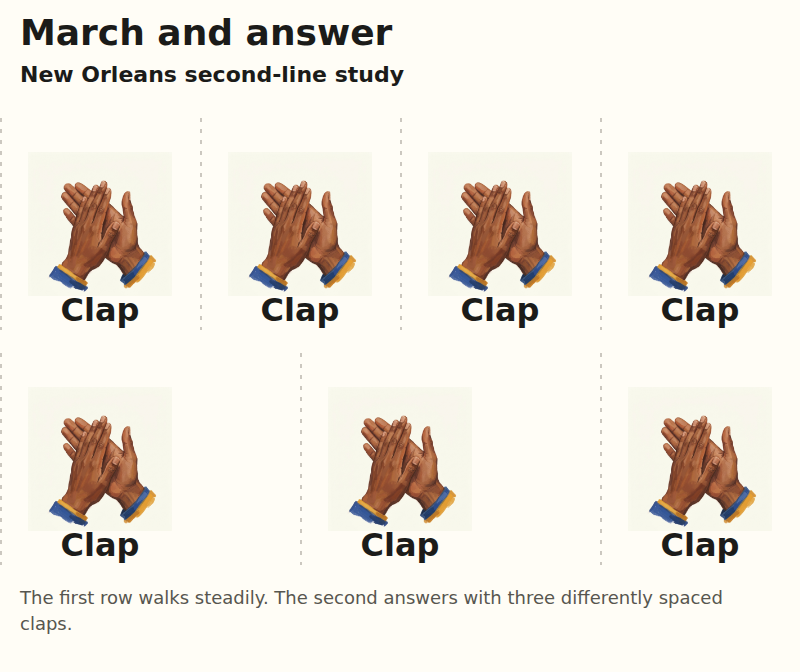
New Orleans second-line study
Teacher-led challenge: step the first row, echo the answer, then explore a real second-line performance through the sources.
These scenes introduce musical settings. Each activity has a teacher note and source links.
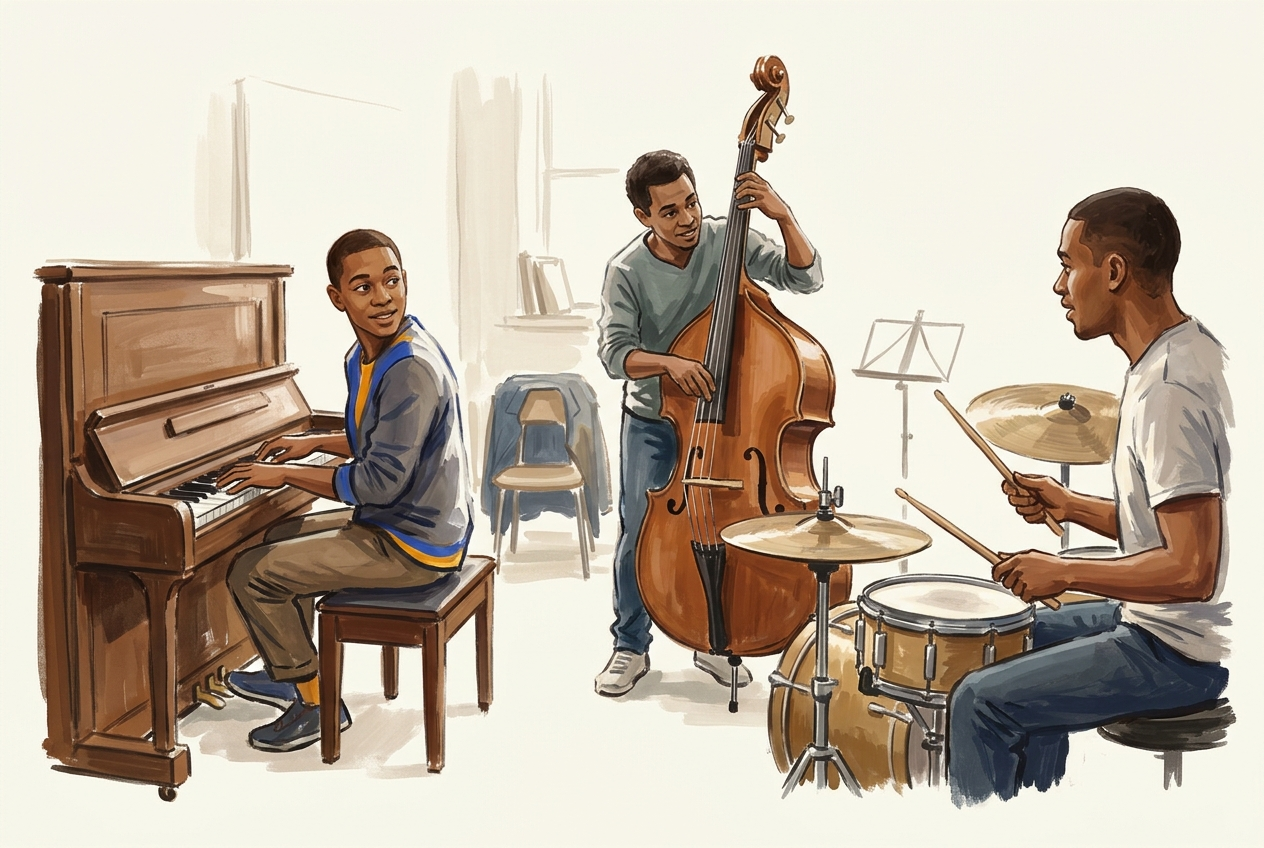
Jazz players shape timing, accents and phrasing together. Our long-short pairs use a fixed triplet approximation so the difference from even pairs is easy to try.
Carnegie Hall: Rhythms That Swing →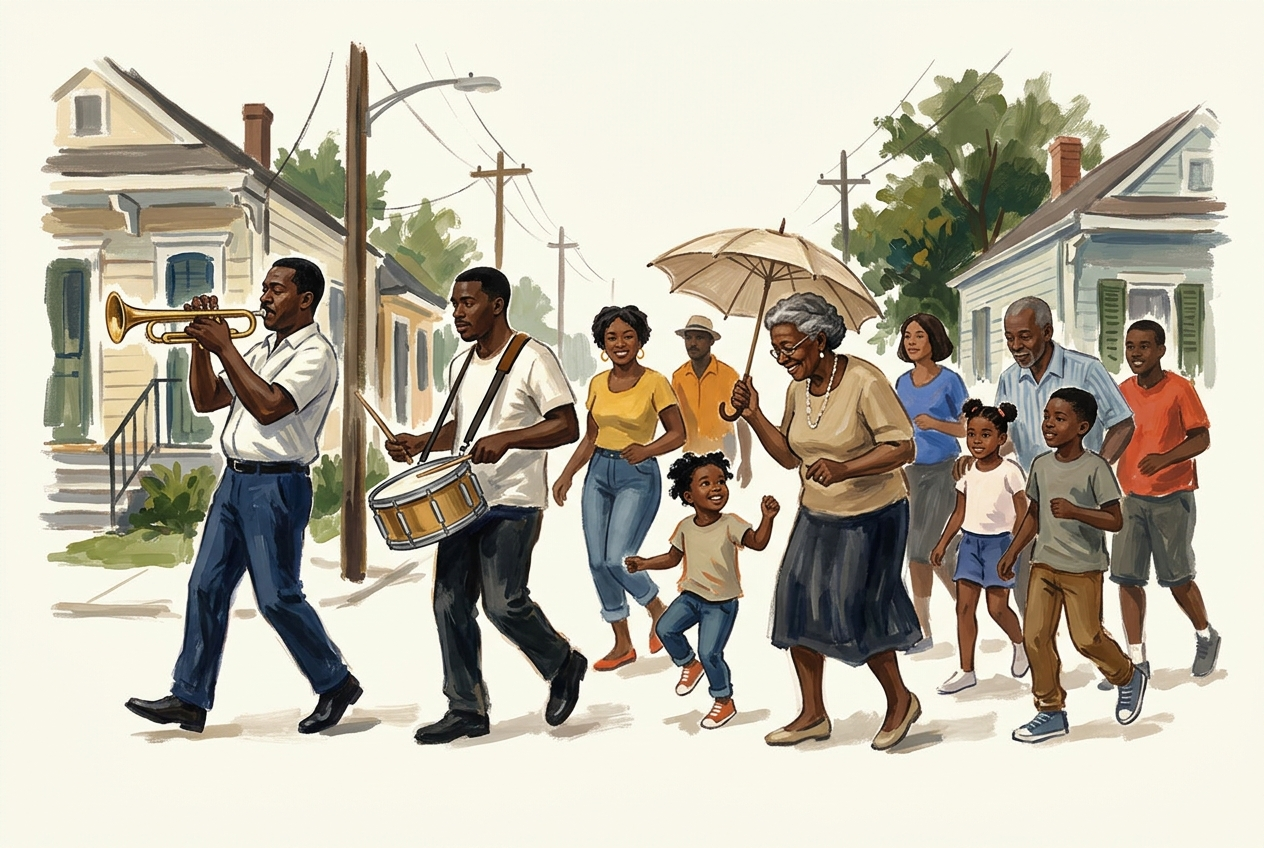
Second-line parades belong to a living Black New Orleans community tradition. March and answer is an original classroom study; explore the band, dancers and changing musical conversation through the sources.
National Park Service: Jazz Origins in New Orleans →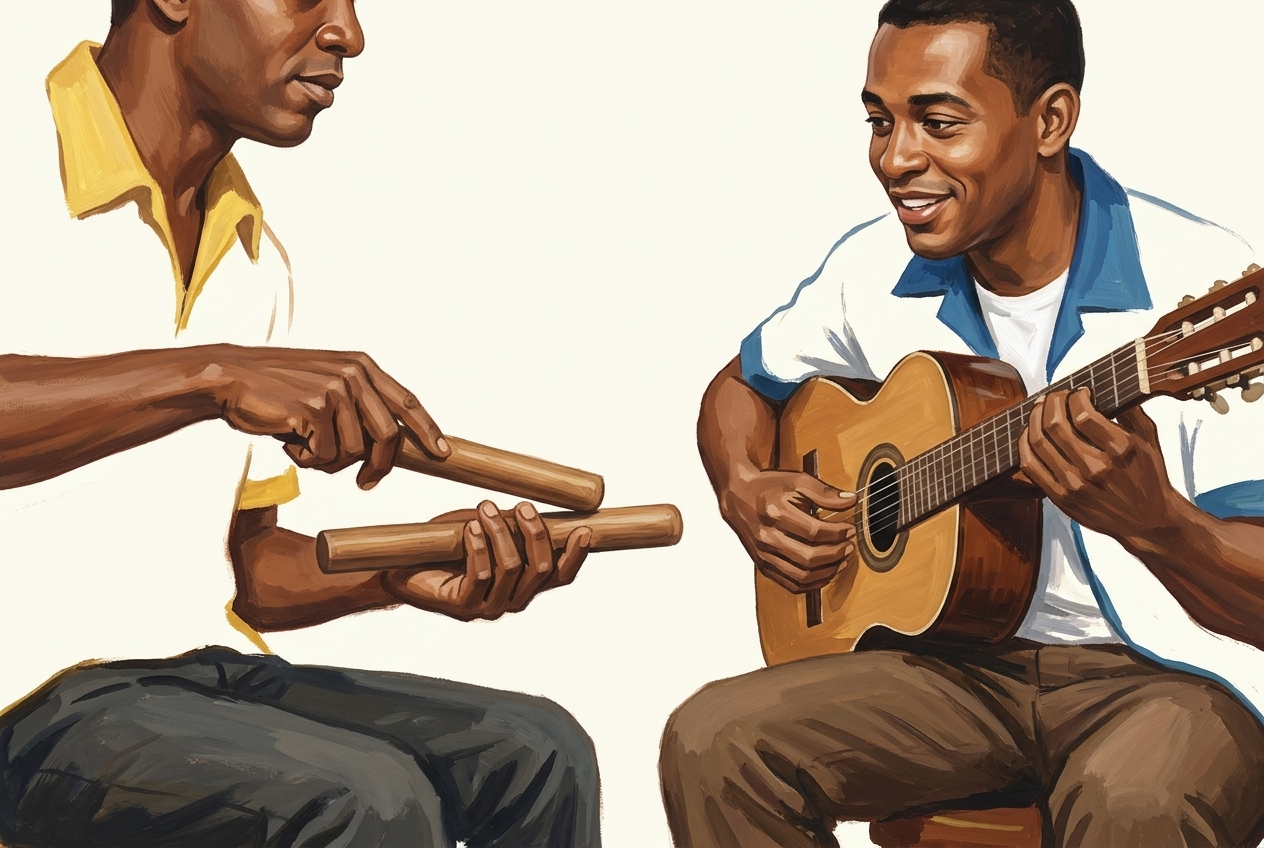
Son clave organises a two-bar musical cycle. The 3–2 version has three attacks in the first bar and two in the second. Learn each side before joining them.
Smithsonian Folkways: Cuban Son teacher guide, pp. 14–15 →